
Does niche perfume actually beat designer, or is that just what niche brands want you to believe? Neither one wins by default. The real difference comes down to who makes the perfume, how much oil is actually in the bottle, and what you're paying for once the label is gone. Designer names come from fashion houses that also sell handbags and sunglasses, built for a mall counter in Bengaluru where five other people are wearing the same bottle. Niche houses make only scent, usually in smaller batches, with more of that scent actually in the formula.
What actually separates niche perfume from designer perfume?
The real split is corporate, not chemical. Designer perfume comes from a fashion house, whether that's a global name or an Indian apparel brand, and the perfume is one product line among many. Niche perfume comes from a house that makes only fragrance, nothing else.
That single difference explains almost everything downstream. A designer brand licenses its name to a fragrance house like Givaudan or Firmenich, who builds a scent to fit the brand's existing identity and a mass production line. A niche house builds the identity around the scent itself, in far smaller runs, without a clothing line propping up the budget.
Neither structure guarantees quality. Some legendary bottles are designer. Some niche houses release forgettable ones. The label tells you how the company is built, not how good the perfume actually is.
Here's a quick gut check. Dior, Gucci, and Chanel are designer houses that also sell clothes and bags. Le Labo, Byredo, and Diptyque only sell scent, even though a few of them are now owned by the same large groups that own the designer names too. The category is about structure, not secrecy.
Why does niche perfume cost more, and is it worth it?
Niche perfume usually costs more because of what's inside the bottle, not the name on it. Rarer raw materials, like real oud or a higher percentage of natural extracts, cost more to source than the cost-controlled ingredients most mass designer formulas are built on.
Designer perfume keeps its price down through scale. Millions of identical bottles, produced on the same lines that make thousands of SKUs a year, plus a marketing budget spent on ad campaigns and celebrity faces instead of the juice itself. You're partly paying for the ad, not just the scent.
Whether that's worth it depends on what you actually want from a bottle. If you want instant recognition, a designer name delivers that reliably. If you want something almost nobody else in the room is wearing, niche earns its price tag. Neither answer is wrong. One is just more honest about what it's selling.
That price gap isn't invented, either. A niche 50 ml bottle can cost as much as a designer 100 ml, purely because of what got sourced and how few bottles actually got made.

Does niche perfume really last longer than designer?
Often, yes, but it's the concentration doing the work, not the "niche" label itself. Most designer perfumes sit in the Eau de Toilette or standard Eau de Parfum range, meaning a lower percentage of fragrance oil diluted into alcohol. Niche houses more often release extrait-strength formulas with a much higher oil percentage.
That oil percentage decides sillage, the trail a scent leaves in the air as you move through a room, and drydown, how it smells hours after you spray it. More oil generally means a longer drydown and a stronger sillage. A niche extrait can survive well past the workday. A weaker designer EDT can start fading before your first meeting is over.
This is where the "niche vs designer" framing actually gets misleading. It's not the label that determines longevity. It's the number on the bottle that almost nobody reads.
You can usually spot it on the box before you even open it. Look for Parfum, Extrait de Parfum, or Eau de Parfum first, and the brand name second. That percentage is the number actually doing the work.

Where does MYOP actually fit into this?
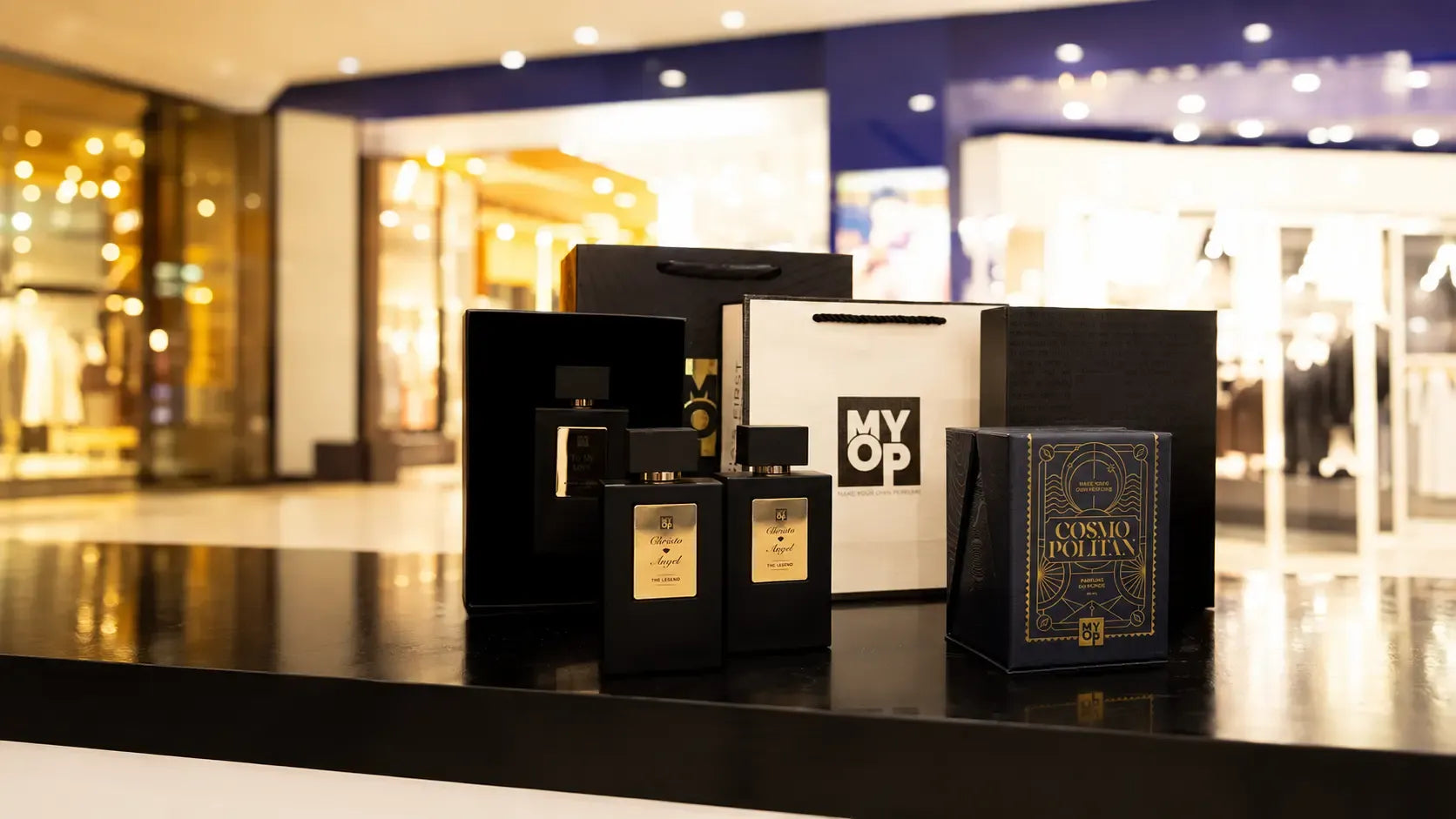
MYOP doesn't sit neatly in either camp, and that's the honest answer, not a dodge. Every MYOP perfume is built at a 50% compound formulation, reformulated for tropical weather, which puts the concentration closer to niche-strength than to a standard designer EDT.
Here's the opinion part: the niche versus designer debate spends too much energy on where a bottle was made and not enough on whether it survives your actual day. A Chennai commute doesn't care if your perfume came from a Paris atelier or a mall shelf. It cares about oil percentage and application, full stop.
What MYOP adds that neither camp typically offers is personalization. Fusion lets you blend two MYOP perfumes at the table until the ratio is yours alone, and a Personalized Perfume puts your name on the bottle itself. Niche gives you rarity. Designer gives you recognition. MYOP gives you a formula built for Indian weather that you had a hand in making, without importing a bottle or waiting on a niche house's limited run.
FAQ
Is niche perfume always better than designer?
No. Niche tends to use higher concentrations and rarer materials, but quality still varies bottle to bottle in both categories. A well-made designer EDP can outlast a mediocre niche release.
Why is niche perfume so expensive?
Rarer raw materials, smaller production runs, and less reliance on mass advertising all push the price up. You're paying for the ingredients and the scarcity, not just the name.
Does niche perfume actually last longer on skin?
Usually, because niche formulas skew toward higher oil concentrations like extrait. The concentration number matters more than whether a brand calls itself niche or designer.
Is MYOP a niche brand or a designer brand?
Neither, by design. MYOP's 50% compound formulation sits closer to niche-strength concentration, but it's sold across MYOP stores in India, not through a single boutique or a global fashion house.
Can I try a niche-strength perfume without importing one?
Yes. Walk into a MYOP store and test the 50% compound formulation on skin, or build your own ratio at the Fusion table.
What's the single biggest factor in how long a perfume lasts?
The oil concentration in the formula, more than the brand category it belongs to. A higher percentage means a longer drydown, whether the bottle is niche, designer, or from a perfume bar.
Skip the label. Trust your skin.
Niche or designer was never really the question that mattered. Every fragrance aisle promises to be the one that lasts, betting on reputation instead of formula. The oil percentage decides that, not the shelf it sits on, and no label tells you how it'll actually wear through a full day in Indian heat. Test it yourself. Feel the difference on skin. Make it MYOP.
Share:
Best Perfume Gifts in India: The Complete Guide