

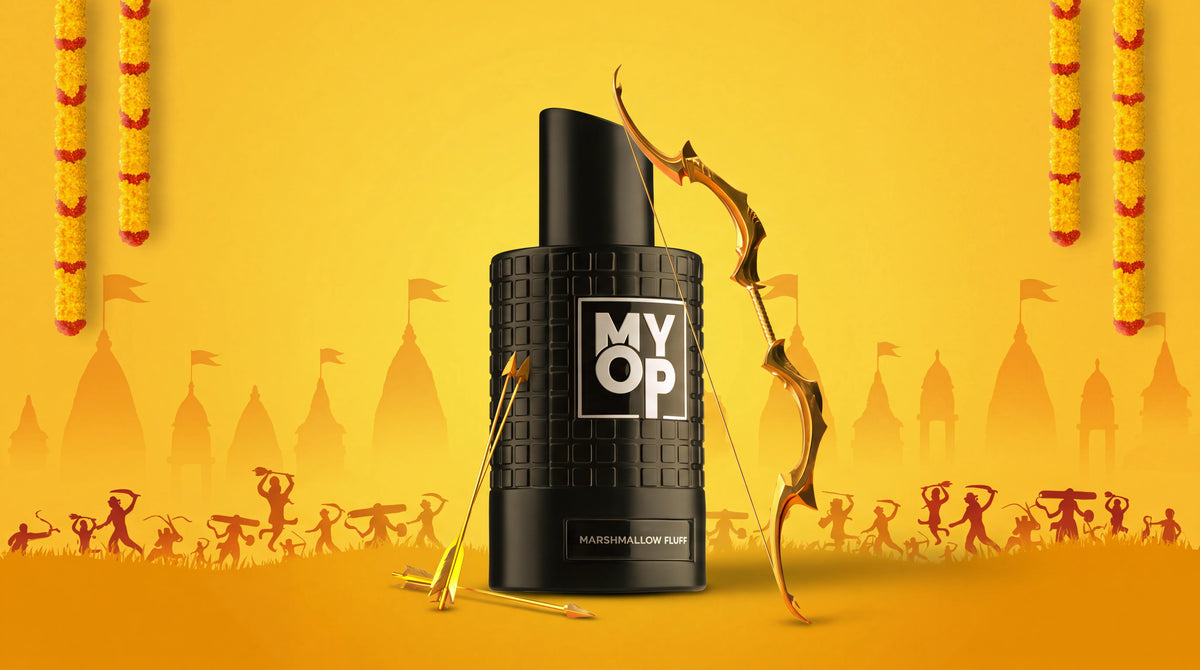
Tomorrow at dusk, a crowd will stand on a Ramlila ground and watch a paper giant burn. Kids will sit on shoulders and phones will go up, but almost nobody will ask the quieter question: what am I burning myself?
The Ravan Dahan of the mind is a simple answer. Pick one thing you carry, like a grudge or a comparison habit, and let it go on purpose. That's your inner Ravan, and the flame you watch tomorrow will mean something to you.
What is the Ravan Dahan of the mind?
The Ravan Dahan of the mind is the practice of naming one thing that weighs you down and letting it go on purpose, the way the effigy is burned on Dussehra. It takes five minutes, and it needs no priest and no props.
Here's where the idea comes from. On Vijayadashami, Ravan's effigy is burned at dusk to mark the victory of good over evil.
His ten heads are often read as symbols, not just a villain's costume. Brahma Kumaris, a spiritual organisation, links them to five vices: lust, anger, greed, attachment and ego. The same article names jealousy and comparison as traits that quietly drain our energy. The reading is simple: the real Ravan isn't out in the field, he's the part of us that keeps coming back.
My view: the effigy is the easy part. Paper burns in ten minutes. A grudge doesn't.
What are the ten heads of your inner Ravan?
Your inner Ravan has ten heads when you name ten things you keep carrying, and this is a modern reading, not scripture, so make the list your own. Here are ten that come up often:
- A grudge you replay while you shower.
- Comparing your life to someone else's best day.
- Needing to be right, even when it costs you peace.
- Anger that arrives faster than your patience.
- Regret about a decision you can't undo.
- Guilt you've already paid for.
- Fear of starting again.
- Overthinking a message you haven't sent.
- Holding on to someone or something that stopped holding you.
- Saying yes when you mean no.
Don't try to burn all ten. Pick one. The one that made your chest tighten a little as you read it is usually the right one.
How do you let go of something on Dussehra?
You let go on Dussehra by choosing one head, writing it in one honest sentence, destroying the paper safely, and doing one small thing differently the next morning. Here it is in four steps:
- Pick one head from the list. Only one.
- Write it as a single sentence, starting with "I'm ready to stop..."
- Tear the paper into pieces and bin it, or burn it on a steel plate, away from curtains and children. Watch it finish.
- The morning after, do one small thing that goes the other way. If it was a grudge, send one kind message. If it was comparison, mute one account for a week.
Keep it small. A huge promise breaks by Friday. A small one survives, and that's the whole point of doing this on a day built for fresh starts.
Why does burning something help you let go?
Burning something helps you let go because a ritual gives a feeling a clear ending. A thought with no ending keeps circling. A paper that's gone has one.
Doing it on the same day as everyone else helps too. When thousands of people watch the same flame, your small decision feels less lonely, and nobody has to know which head you picked. Dusk helps, too, because the day is ending, the noise is high, and for a minute everyone is looking at the same thing, which makes it one of the few moments you can be private inside a crowd.
Think of the last time you cleared out a cupboard. You didn't plan to feel lighter, but you did. Letting go of a thought works the same way: the clearing is small and physical, and the relief follows.
Smell can mark the moment as well. Some people light incense or a diya, and some start wearing a fresh scent from the morning after, so the new start has something they can actually feel. We wrote about how fragrance shapes mood if you're curious.
What comes after the flame?
After the flame comes the quiet, and that's where the real work starts. Dussehra falls on the tenth day, right after Navratri's nine nights, so for many families it already works as a day to begin again.
Some people like something physical to mark a new start, and a scent does that quietly. MYOP's Afterparty, a Signature Perfume, is a good fit for this moment. Bergamot and lemon open it, neroli and juniper berry sit in the heart, and vetiver and oakmoss ground it. MYOP describes it as the calm after the storm, which is exactly where a Ravan Dahan ends.
Diwali follows a few weeks later, and homes get cleaned and lit up. You could treat your mind the same way. Clear the head first, then the house. If you're already planning ahead, our Diwali post is a good place to start.
Be gentle with yourself on the way. Some heads grow back. That isn't failure, it's the reason the festival returns every year, and you can burn the same one again next week or next Dussehra.
Nobody else needs to see that piece of paper, it only has to be honest. Come back to your sentence in a week and read it once, and if it feels lighter, you've done it right.


FAQs
What does Ravan Dahan symbolize?
Ravan Dahan marks the victory of good over evil, with Ravan's effigy burned at dusk on Vijayadashami. Many people also read it as a reminder to let go of inner flaws like ego and anger.
What do the 10 heads of Ravan represent?
They're often read as symbols, and the readings vary. One view, from Brahma Kumaris, ties them to five vices: lust, anger, greed, attachment and ego.
When is Ravan Dahan in 2026?
Dussehra falls on Tuesday, 20 October 2026, and Ravan Dahan usually happens in the evening. Exact timings vary by place, so check your local Ramlila committee or panchang.
How can you let go of negative thoughts on Dussehra?
Pick one thing, write it in a sentence, tear or burn the paper safely, and do one small opposite action the next morning. Keep it small so it lasts.
Do you need a priest to do the inner Ravan ritual?
No. It's a personal reflection, not a required ritual. If your family has its own puja, do that first.
Tomorrow at dusk, the flame will do its part. Your part is quieter, and it starts the morning after. Nobody will clap for it, and that's fine. Pick one thing to leave behind and one thing to begin, and let a fresh scent mark the start. Find yours at a MYOP store or on myop.in.
This Dussehra, burn one thing. Begin one thing. Make it MYOP.
Share:
How to Choose a Perfume Online Without Smelling It